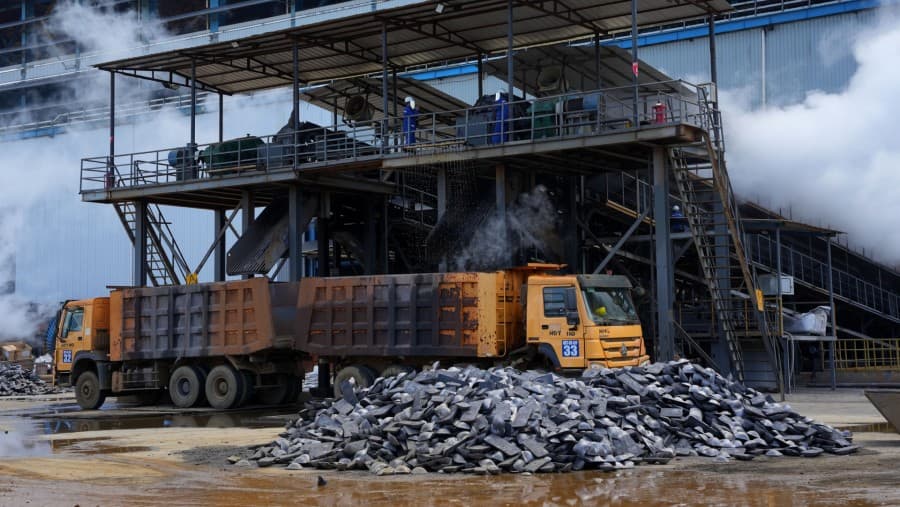
Starting 1 January 2027, exports of ferro alloys can only be carried out through PT Danantara Sumberdaya Indonesia (PT DSI). Ahead of that deadline, the Ministry of Trade is evaluating whether the infrastructure, implementing regulations, and business actors are ready.
For mining companies and metal industries, this change touches nearly the entire export chain, from contracts with buyers to customs documentation. Understanding it now is key to keeping business running without violating the rules. Also read: Incorporation of an Export–Import Company in Indonesia Including API-U, API-P, and Customs Registration
What Is the Single-Channel Export via PT DSI?
PT DSI was established by the government as an export state-owned enterprise (BUMN) that will take over trading transactions for a number of strategic natural resource commodities. In the initial implementation stage, these commodities include coal, palm oil, and ferro alloys. The policy aims to strengthen state oversight of export proceeds, while curbing under-invoicing, transfer pricing, and capital flight, which have long been problems in the export trade of Indonesian natural resources.
Ferro alloys are one of the three main commodities included in the initial stage of this policy, together with coal and palm oil.
Legal Basis for Ferro Alloy Exports
The single-channel export arrangement for ferro alloys refers to two main regulations:
According to the Ministry of Trade, this regulation ensures that ferro alloy exports are carried out only by the export BUMN. Exceptions are granted to parties holding investment contracts, divestment arrangements, or domestic processing and refining activities, in accordance with government provisions.
Stages of Ferro Alloy Export Implementation
The government is implementing this policy in stages so as not to disrupt supply chains and ongoing business activities.
Transition period: 1 June – 31 December 2026
Ferro alloy exporters can still operate as usual, using their own company name on the Export Goods Notification (PEB), customs documents, and the integrated reporting system. One new obligation applies: periodically reporting export activities to PT DSI.
Full implementation: from 1 January 2027
PT DSI becomes the sole exporter. Transactions, contracts with overseas buyers, customs clearance, transportation, and payment are all carried out centrally by PT DSI.
The Ministry of Trade’s current evaluation is being conducted to ensure that the system, implementing regulations, and business actors are ready before this phase begins.
Also read: Incorporation of an Export–Import Company in Indonesia Including API-U, API-P, and Customs Registration
Regulated Products
Permendag 17/2026 regulates 15 tariff lines derived from HS 7202, including ferromanganese, ferrosilicon, ferrochromium, ferronickel, ferromolybdenum, ferrotungsten, ferrotitanium, ferrovanadium, and ferroniobium.
The 15 tariff lines are divided into three categories. Twelve tariff lines must be accompanied by a Surveyor Report. The remainder are split between those that may be exported without special controls and those that are prohibited from export.
Why the Ministry of Trade’s Evaluation Matters for Businesses
The Ministry of Trade’s evaluation is not a mere formality. Several industry associations have voiced concerns over the operational design of the scheme, particularly regarding the transfer of ongoing export contracts, the position of registered exporters, price setting, trade financing, and the allocation of responsibility toward overseas buyers.
As long as these matters remain unclear, business actors face legal and commercial uncertainty. The risk is greatest for companies bound by long-term export contracts with international partners.
What Should Businesses Do Now?
Companies in the ferro alloy sector are advised to promptly:
- Review ongoing export contracts and adjust them to the reporting obligations to PT DSI
- Ensure compliance with the Surveyor Report requirement according to the product’s tariff line
- Prepare the corporate structure and licensing documents for the transition to the export scheme through PT DSI
- Consult legal advisors or corporate consultants on the contractual implications and business risks
How Can CPT Corporate Help?
A change of this scale demands careful legal and administrative readiness. CPT Corporate can assist ferro alloy companies and other natural resource sectors in:
- Reviewing and aligning ongoing export contracts with PP 24/2026 and Permendag 17/2026
- Handling licensing and reporting to PT DSI during the transition period
- Providing compliance consultation on the Surveyor Report and tariff line classification
- Restructuring corporate documents so that the company is ready for full implementation in 2027
Conclusion
The time remaining before 1 January 2027 is limited. Companies that understand the legal basis, stages, and commodity scope now will be better prepared to adapt without operational or commercial disruption. Contact CPT Corporate to ensure your export business stays compliant and runs smoothly amid these changes.
Disclaimer
This article was prepared by CPT Corporate solely for general informational purposes and is not intended as, and cannot be considered, legal, tax, customs, trade, or other professional advice. Reading this article does not create a client-consultant relationship between the reader and CPT Corporate.
The information in this article is based on laws and regulations, official statements of government agencies, and public information available as of the date of writing. The single-channel export policy is still in the evaluation and transition stage, so its provisions, implementing regulations, and implementation practices may change at any time. Its application may also differ depending on the facts and circumstances of each business. CPT Corporate makes no warranty, either express or implied, as to the completeness, accuracy, or currency of this information.
Readers are advised not to act or refrain from acting on the basis of the information in this article without first obtaining professional advice appropriate to their specific situation, and to refer directly to the official text of regulations issued by the competent authorities. To the extent permitted by applicable law, CPT Corporate is not liable for any loss arising from the use of or reliance on the information in this article.
 Client Login
 Share on facebook
 Share on X