Challenges and Opportunities in the Indonesian Construction Sector
English
July 3, 2024by Falaa Hurala

Challenges and Opportunities in the Indonesian Construction Sector

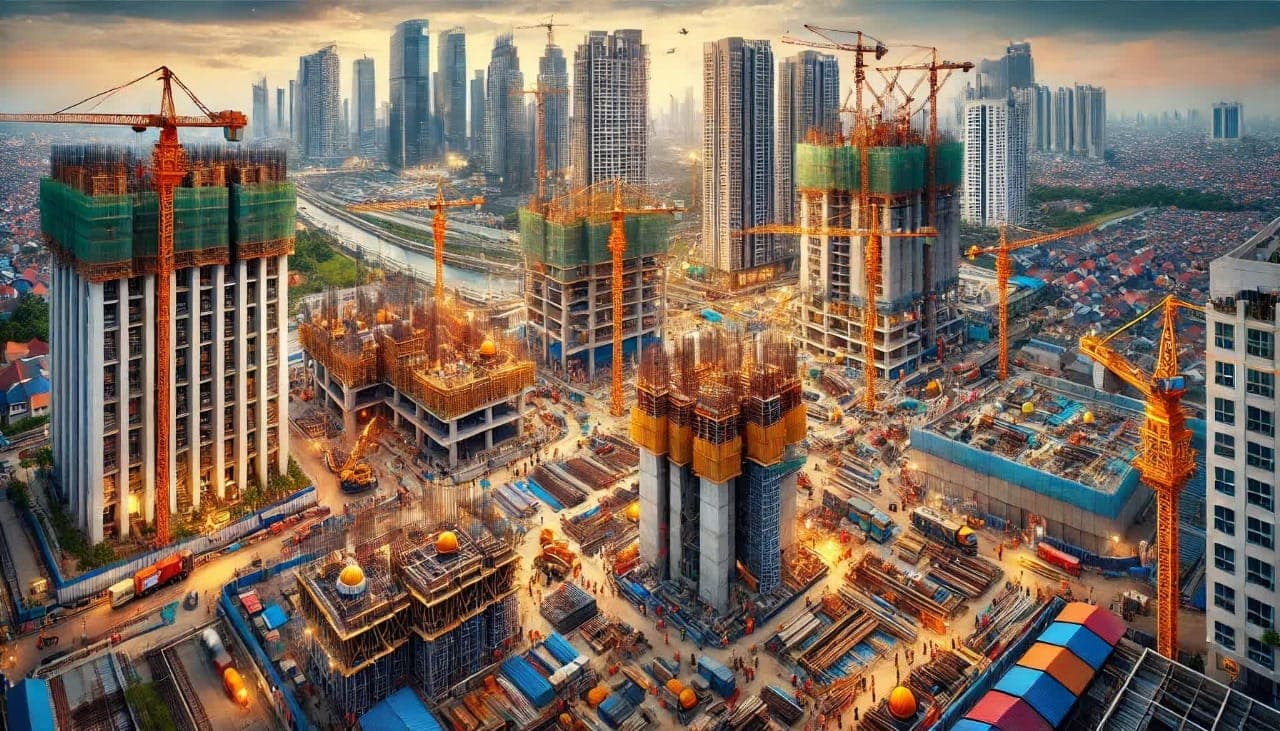
The Indonesian construction sector has shown remarkable growth and resilience, emerging as one of the largest and fastest-growing industries in Southeast Asia. As of 2023, the sector was valued at approximately USD 264.34 billion and is projected to .

The Indonesian construction sector has shown remarkable growth and resilience, emerging as one of the largest and fastest-growing industries in Southeast Asia. As of 2023, the sector was valued at approximately USD 264.34 billion and is projected to continue expanding at a CAGR of 7.5%, reaching USD 379.41 billion by 2028. This article delves into the current landscape of the Indonesian construction sector, examining the various challenges it faces and the abundant opportunities it offers. Readers will gain insights into the significant government investments fueling infrastructure development, the impact of rapid urbanization and population growth, and the key regulatory frameworks that shape the industry. Additionally, we will explore the potential hurdles such as labor shortages and economic instability, as well as the promising prospects in housing, commercial, and industrial development. By the end of this article, you will have a comprehensive understanding of the dynamics at play in the Indonesian construction sector and the essential steps required to establish a successful construction company in this burgeoning market. Whether you are an industry professional, a potential investor, or simply interested in the sector's growth, this article provides valuable information and actionable insights to navigate and capitalize on the opportunities within the Indonesian construction landscape. [ez-toc]

Government Investment and Infrastructure Development

One of the primary drivers of growth in the Indonesian construction sector is the significant investment by the government in infrastructure projects. These include the development of roads, railways, airports, and power plants. The government's commitment to improving national connectivity and boosting economic growth through infrastructure development is a critical factor in the sector's expansion.

Urbanization and Population Growth

Indonesia's rapid urbanization and population growth are also major contributors to the booming construction industry. With more people moving to cities, the demand for residential and commercial buildings, as well as urban infrastructure, has surged. This trend is expected to continue, creating ongoing opportunities for construction companies.

Challenges in the Indonesian Construction Sector

Despite the positive outlook, the Indonesian construction sector faces several challenges:

Regulatory and Legal Framework

The Indonesian construction industry is governed by complex regulations and legal frameworks, including the Construction Law and Government Regulation No. 14 of 2021. Navigating these regulations requires a thorough understanding to ensure compliance and smooth operation.

Labor and Skill Shortages

The sector often experiences shortages of skilled labor and qualified professionals such as engineers and architects. This gap can lead to delays and increased costs in construction projects.

Economic and Financial Instability

Global economic conditions and local financial instability can impact the construction sector. Factors such as inflation, fluctuating material costs, and changes in investment patterns pose risks to ongoing and future projects.

Environmental and Sustainability Concerns

There is a growing emphasis on sustainable construction practices. Companies must adopt eco-friendly methods and materials to align with global sustainability standards, which can initially be cost-intensive.

Opportunities for Growth

Despite these challenges, numerous opportunities exist within the Indonesian construction sector:

Housing Development

The demand for housing, particularly in urban areas, is rapidly increasing. This presents significant opportunities for residential construction projects.

Commercial and Industrial Development

The growth of Indonesia's middle class is driving demand for commercial spaces such as shopping malls, office buildings, and hotels. Additionally, Indonesia's rise as a manufacturing hub creates opportunities for industrial construction.

Starting a Construction Company in Indonesia

For companies interested in entering the Indonesian construction market, here are key steps to follow:

Choose a Business Structure

The most common structure for construction companies is a Perseroan Terbatas (PT - limited liability company) or Construction Representative Office (BUJKA).

Obtain Licenses and Permits

Companies must obtain a business license from the Investment Coordinating Board (BKPM) and register to the Construction Services Development Agency (LPJK) and Ministry of Public Works and Public Housing Indonesia (Kementrian PUPR).

Hire Qualified Staff and Expert

It is essential to hire experienced engineers, architects, and construction workers to ensure project success. Further, experts with the background that is relevant with your projects are required for the registration process, as it is one of the requirements for the government to issue the license/permit.

Compliance with Local Regulations

Ensuring compliance with local labor laws and construction regulations is critical to avoid legal issues and penalties.

Conclusion

The Indonesian construction sector offers a dynamic environment with significant growth potential. By navigating the challenges and leveraging the opportunities, companies can establish a strong presence in this thriving market. For those looking to start a construction company, understanding the regulatory landscape and securing the necessary resources and permits will be key to success.  Our expert team is here to support your success every step of the way. Don’t miss out on the opportunities in this vibrant sector—partner with CPT Corporate today and build a brighter future. Learn more about how we can help and take the first step towards your construction business success in Indonesia.

Related Posts

Why a Deed of Establishment (Akta Pendirian) Is Critical for Company Registration in Indonesia
English
April 14, 2026

Why a Deed of Establishment (Akta Pendirian) Is Critical for Company Registration in Indonesia

Starting a business in Indonesia involves several legal steps, but one document sits at the very foundation of the entire process: the Deed of Establishment (Akta Pendirian) . Without it, a company cannot legally exist as a corporate entity under Ind...

Read More
Why Environmental Approval (UKL-UPL or AMDAL) May Be Required Before Obtaining Operational Licenses?
English
April 12, 2026

Why Environmental Approval (UKL-UPL or AMDAL) May Be Required Before Obtaining Operational Licenses?

Indonesia has made significant progress in simplifying its investment climate through the risk-based business licensing system and the Online Single Submission (OSS) platform. While the system reduces bureaucracy for many sectors, certain regulatory ...

Read More
When Do You Need a Nominee Director for Your Company?
English
April 7, 2026

When Do You Need a Nominee Director for Your Company?

Expanding a business across borders comes with exciting opportunities—but also complex regulatory requirements. One concept that frequently appears in international business structuring is the Nominee Director . While often misunderstood, a nominee d...

Read More

Schedule a Free Consultation!

Tell us about your plan and our consultants will reach out to you to assist with your needs.

Book Free Consultation
WhatsApp