Indonesia is emerging as one of the most promising markets in Southeast Asia, offering lucrative opportunities for international investors, especially Australians. With its strategic location bridging the Asia-Pacific region, robust economic growth, .
Indonesia continues to attract Australian businesses looking for growth, regional expansion, and access to Southeast Asia's largest economy. The opportunity is broad, from manufacturing and logistics to healthcare, technology, energy, and infrastructure. However, choosing the right sector requires more than identifying a fast-growing industry because ownership rules, licensing, local demand, and operating requirements can vary significantly.
Key Takeaways
- Indonesia remains a significant market for Australian investors seeking Southeast Asian expansion.
- Manufacturing, downstream industries, logistics, infrastructure, technology, healthcare, and energy remain important investment areas.
- Australian businesses can use IA-CEPA as part of their broader Indonesia market strategy.
- Sector attractiveness does not automatically mean an activity is open to unrestricted foreign investment.
- Foreign investors should check the relevant KBLI, ownership rules, licensing requirements, and investment structure before entering.
- A PT PMA may be appropriate for businesses that intend to establish and operate a commercial presence in Indonesia.
Why Indonesia Matters to Australian Investors
Indonesia's proximity to Australia and its large domestic market make it a natural consideration for Australian businesses expanding into Southeast Asia. The bilateral investment relationship is also becoming more active, with Australian investors exploring opportunities across infrastructure, mining and resources, healthcare, finance, and other sectors. In February 2026, an Australian investor mission involving 29 senior corporate and institutional investors travelled to Indonesia to explore long-term investment opportunities.
Indonesia's investment performance also remains substantial. Investment realization reached IDR 1,010.6 trillion in the first half of 2026, up 7.2% year on year, with foreign direct investment accounting for IDR 507.6 trillion.
Australia's Strategic Relationship With Indonesia
The Indonesia-Australia Comprehensive Economic Partnership Agreement, or IA-CEPA, provides an important framework for bilateral economic engagement. The agreement entered into force in July 2020 and provides preferential arrangements for Australian goods entering Indonesia while supporting stronger value chains between Australian and Indonesian businesses.
For investors, however, IA-CEPA should be viewed as one part of the market-entry picture. It does not replace Indonesian company, ownership, licensing, tax, employment, or sector-specific requirements.
Investment Sectors Australian Businesses Should Watch
Rather than treating every high-growth sector as equally suitable, Australian investors should compare Indonesia's current investment trends with their own capabilities, capital requirements, and regional strategy.
Manufacturing and Downstream Industries
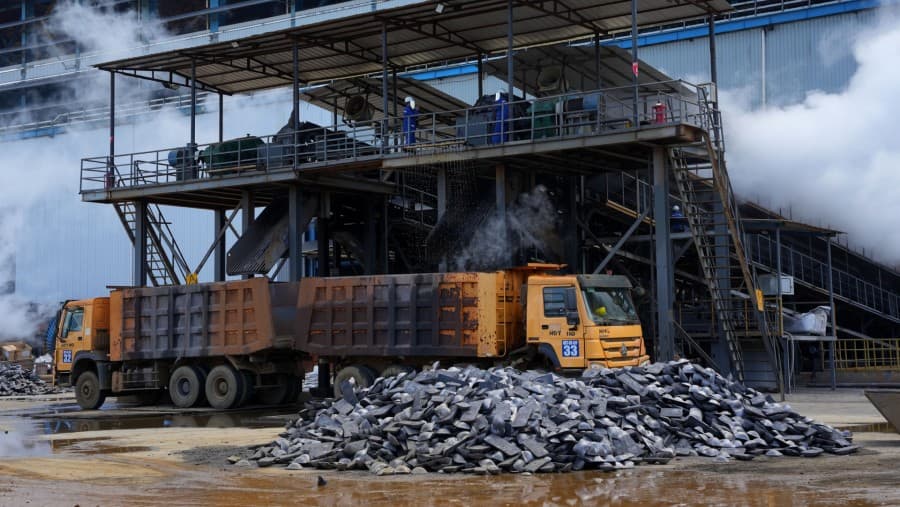
Manufacturing remains one of Indonesia's strongest investment areas, particularly where the country is developing greater domestic processing and value creation. In 2025, downstream investment reached IDR 584.1 trillion and grew 43.3% year on year, with mineral processing accounting for the largest share.
For Australian businesses, opportunities may extend beyond direct manufacturing to equipment, technology, professional services, supply chains, and partnerships supporting industrial development. Investors entering these activities should assess the relevant industrial classification, licensing requirements, infrastructure, and potential local supply-chain partners before committing capital.
Mining, Energy and Critical Resources
Indonesia's natural resources continue to attract substantial investment, while government policy increasingly focuses on downstream processing rather than exporting raw materials. Mining was among the leading sectors for investment realization in the first half of 2026, while the government's downstream strategy also covers minerals, plantations and forestry, oil and gas, and marine and fisheries.
Australian companies with expertise in mining services, resource technology, engineering, energy, and related professional services may therefore find opportunities across the wider value chain. The investment case should still be assessed against sector-specific licences, environmental requirements, foreign ownership rules, and project economics.
Logistics, Transportation and Warehousing
Indonesia's geography creates substantial demand for transportation, warehousing, distribution, and supply-chain infrastructure. Transportation, warehousing, and telecommunications were among the largest contributors to Indonesian investment realization in 2025 and remained among the leading sectors in the first half of 2026.
Australian businesses with logistics, supply-chain, infrastructure, or technology capabilities may find opportunities by serving Indonesia's expanding domestic and industrial markets. The right investment structure will depend on the specific activity, because licensing and foreign participation requirements can differ across logistics and transportation businesses.
Digital Economy and Technology
Indonesia's large consumer market continues to support demand for digital products, technology services, financial technology, software, and other technology-enabled businesses. For Australian technology companies, Indonesia can provide both a substantial customer market and a potential base for regional expansion.
However, digital businesses should assess more than market size before entering. Data protection, electronic systems, sector-specific regulation, licensing, consumer protection, and the appropriate business classification can all affect how a technology business operates in Indonesia.
Healthcare and Life Sciences
Healthcare remains an area of interest as Indonesia expands healthcare capacity and demand for medical services, technology, and pharmaceutical products. Australian businesses may bring relevant expertise in healthcare services, medical technology, pharmaceuticals, aged care, education, and supporting technologies.
The sector requires careful regulatory assessment because healthcare activities can involve specific licensing, professional requirements, product approvals, and ownership considerations. A market opportunity should therefore be evaluated alongside the regulatory pathway required to commercialise the proposed product or service.
Infrastructure and Supporting Services
Indonesia continues to invest in infrastructure that supports connectivity, industrial development, urban growth, and economic activity. Current investment priorities include infrastructure and downstream industries, while Australian investor missions have also identified infrastructure among the sectors of interest.
For Australian businesses, the opportunity may extend beyond becoming a direct infrastructure investor. Engineering, construction support, project management, technology, environmental services, and specialist professional services can form part of the wider infrastructure ecosystem.
What Australian Investors Should Check Before Entering
Identifying an attractive sector is only the first stage of an Indonesia investment strategy. Australian businesses should establish whether their proposed activity can be legally and commercially implemented before deciding on the investment structure.
Check the Business Activity and Foreign Ownership Rules
The first step is to identify the correct business classification, or KBLI, for the proposed activity. The applicable classification can determine licensing requirements and whether the activity is open to foreign investment, subject to conditions, or restricted.
Indonesia's Positive Investment List provides the broader framework for foreign ownership, but investors still need to assess the specific business activity rather than assuming that an entire industry has uniform rules.
Select the Appropriate Market Entry Structure
Businesses intending to conduct commercial activities directly in Indonesia may establish a PT PMA, subject to the applicable investment and licensing requirements. Other situations may call for a different approach, such as working with a local partner, using an existing group structure, or testing the market before establishing a full operating presence.
The right structure depends on the business model, ownership objectives, activities, capital commitment, and expected scale of operations.
Assess Licensing and Compliance Before Investment
A business can be commercially attractive but difficult to operate if the required licences or approvals have not been considered from the beginning. Investors should review business licences, sector-specific approvals, tax obligations, employment requirements, and ongoing reporting obligations before finalising their investment plan.
This is particularly important in regulated industries such as healthcare, financial services, energy, mining, and certain technology activities.
Build a Local Operating Strategy
Market entry does not end when the company is incorporated. Australian businesses may need local employees, suppliers, distributors, professional advisers, operational premises, and relationships with Indonesian customers or partners.
Understanding how the business will actually operate in Indonesia can reveal costs and regulatory requirements that are not obvious during the initial market research stage.
How to Approach an Indonesia Investment Decision
A practical investment assessment should connect the opportunity to the investor's existing capabilities rather than simply selecting the sector with the highest headline growth.
Start by identifying the Indonesian customer or commercial need that the business can address. Then assess the market size, competitors, potential partners, regulatory requirements, ownership structure, expected investment, and operational costs.
For Australian businesses, it is also worth considering whether Indonesia should serve as a standalone market or as part of a wider Southeast Asian expansion strategy. IA-CEPA can support the broader Australia-Indonesia commercial relationship, while local Indonesian requirements determine how the investment can actually be implemented.
Start Your Indonesia Market Entry Strategy
Indonesia offers Australian businesses access to a large and increasingly important regional market, but the strongest opportunities require careful sector and regulatory assessment. CPT Corporate supports foreign investors with company incorporation, business licensing, regulatory assessment, and ongoing corporate compliance in Indonesia.
If you are assessing an investment opportunity or planning to establish an Indonesian operation, company registration in Indonesia can provide the appropriate foundation for evaluating the next steps.
 Client Login
 Share on facebook
 Share on X